
Security
Who holds the keys to your company? The lie of the cloud and the road to sovereignty
Is your company in the cloud or trapped in it? Discover Oksigenia's SEPPAEES framework: sovereign hosting with Debian and Docker to regain full control of your data.
Published 2 min read
I have been in this trade for more than thirty years. I have seen the internet being born, I have seen giants fall and I have watched the web's promise of freedom gradually turn into a walled garden owned by three or four corporations. Today, when a company tells me that it “is in the cloud”, what it is often really telling me is: “I have handed my data and my processes over to a third party, and I hope they don't change the terms of use.”
Convenience has been paid for with a loss of control. But in highly demanding environments, whether schools with thousands of students or companies that handle sensitive information, convenience cannot come before security.
The “all-in-one” problem
The usual model of shared hosting or the big hyperscalers is an illusion of security. Your data lives alongside that of thousands of other customers in opaque infrastructures. If your neighbour suffers a breach, you tremble. If the provider decides to close your account, your business grinds to a halt.
At Oksigenia we don't play that game of Russian roulette. Our philosophy is the radical opposite: if you don't have root access, it isn't your server. It's just an expensive rental.
The SEPPAEES framework: your declaration of independence
To make sure our clients (from the AIC Center to law firms) sleep soundly, we have standardised our own framework for action. We call it SEPPAEES, and it is not a marketing suggestion: it is an engineering requirement for every project we take on:
Security, Scalability, Privacy, Isolation, Portability, Exclusivity, Encryption and Sovereignty.
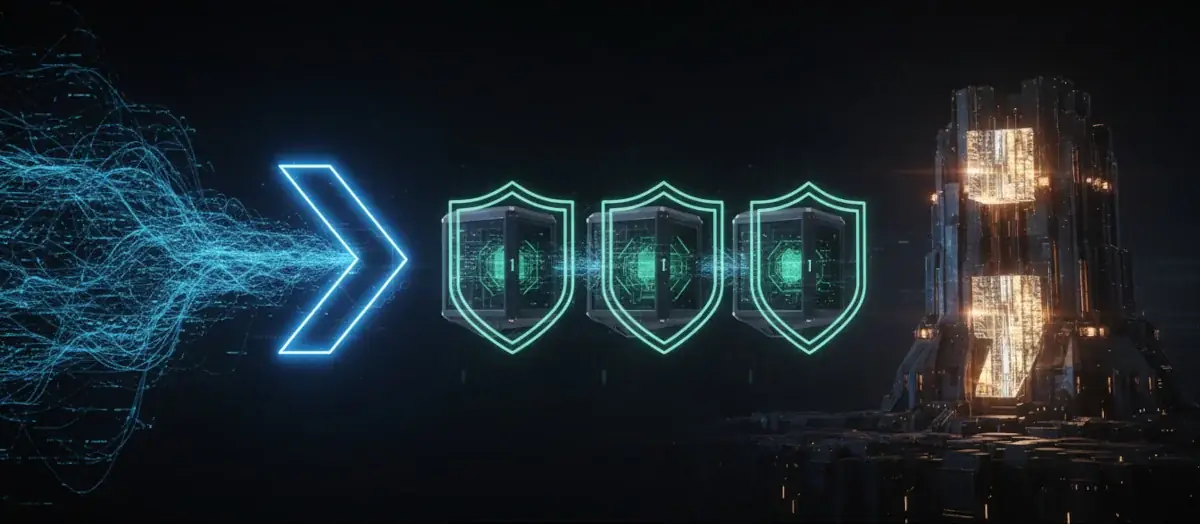
How does this translate into technical reality? Forget generic control panels. We deploy an exclusive VPS for you (usually on the solid rock that is Debian 12). Inside it, there is no chaotic mix of applications. We use Docker to apply surgical isolation: your Moodle lives in one container, your database in another, your n8n in a third.
// Technical metaphor:
if ($root_access == false) {
    die("Error crítico: No hay soberanía.");
} else {
    grow(); // Run stable growth
}
Why you need an architect, not a landlord
Isolation through containers ensures that a problem in one application never contaminates the rest. Portability means that if tomorrow you decide Oksigenia isn't for you, we hand you the keys and you take your infrastructure intact to another provider. No hostage-taking.
This is not easy to implement. It requires precise architecture and expert maintenance to be secure and scalable. I am not going to explain how to configure Docker volumes, because your job is to run your company, not to administer systems. Our job is to make sure technology is an immovable foundation, not a source of anxiety.
Take back control. Breathe in clean air, let your infrastructure breathe unfettered and grow in the certainty that what you build is yours.